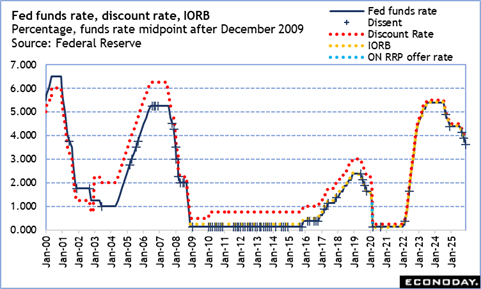
The FOMC meeting of December 9-10 delivered the 25-basis point rate cut to set the federal funds target rate range at 3.50 to 3.75 percent, as expected.
Also as expected, there was a three-way split in the vote with 9 members voting for the cut, two members dissenting in favor of no change in rates, and one member preferred a 50-basis point cut. Fed Chair Jerome Powell portrayed the differences to “strong opinions” about how best to respond to the challenge of achieving the dual mandate. Those believing the weakening labor market needed more support were in favor of removing a little more restriction from monetary policy; Governor Stephen Miran would have liked to see a bigger reduction. Those believing that the greater peril is to price stability lean toward keeping rates steady, including Chicago Fed president Astan Goolsbee and Kansas City Fed Jeffrey Schmid.
Powell noted that there have now been three consecutive cuts of 25-basis points each since the September FOMC meeting, and that it will take time for the full effects of the rate reductions to be seen. He also said that the rate is now at the high end of the neutral range. The FOMC statement indicated that the committee sees the risks to employment and price stability as once more about in balance.
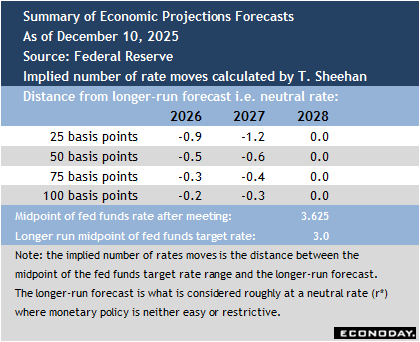
The US economy is running with growth around the 2 percent-mark with relatively stable labor market conditions and the tariff-related inflation likely to run its course in the first quarter 2026 or so. The FOMC’s collective forecast suggests that if this remains the base case, only a small adjustment in the fed funds target rate range is on the near horizon.
Note that the December 9-10 meeting is the final one scheduled for 2025. The January 27-28 meeting will see the rotation of the voting presidents at the meeting. The term for Governor Miran will end as of January 31, 2026. As such, he will be eligible to vote on monetary policy. He is also allowed to remain on the board until someone is nominated and confirmed to fill the term beginning February 1 and ending January 31, 2040.