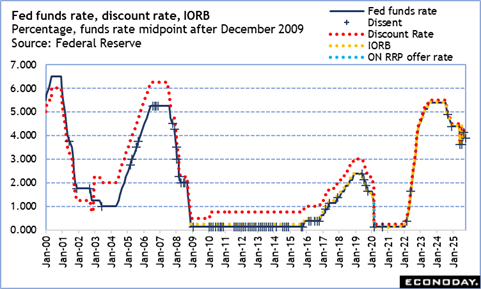
The FOMC left the fed funds target ranges at 3.50 percent to 3.75 percent at the end of the January 27-28 meeting. The FOMC statement reflects an overall positive view of the current US economy with a “solid pace” of growth. The statement noted “some signs of stabilization” after the recent upticks in the unemployment rate, and inflation remaining “somewhat elevated”. However, tellingly, the FOMC did not characterize the risks to the dual mandate of maximum employment and price stability as roughly balanced as it has in the past.
In his press briefing after the meeting, Fed Chair Jerome Powell said, “”The upside risks to inflation and the downside risks to employment still exist,” but he did not make a judgment about “how one is more of a risk than the other.” Against this backdrop, Powell said the FOMC is “well-positioned” to respond to changes in the economy and evolving risks in uncertain times.
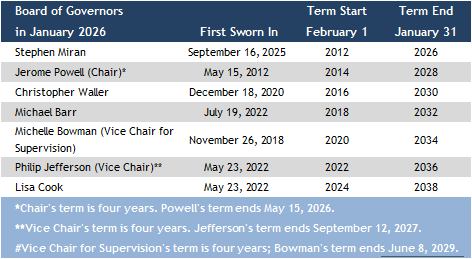
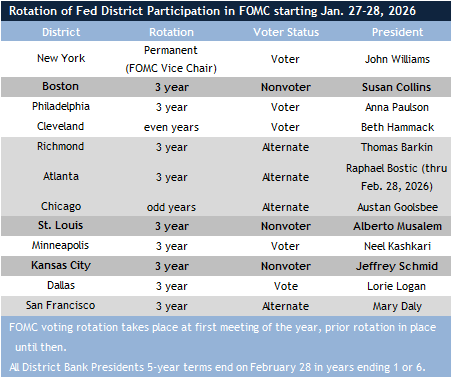
The FOMC decision saw a 10-2 vote. This is the fifth meeting in a row in which the vote was not unanimous. At the January meeting, Governors Stephen Miran and Christopher Waller dissented in favor of a 25-basis point rate cut. Historically, dissent by a governor is rare, and by two or more is rarer still. This was the fourth consecutive dissent from Miran and Waller’s next after a dissent at the July 29-30, 2025 meeting. Waller and Vice Chair for Supervision Michelle Bowman dissented at the July 2025 meeting. In any case, the presence of one or more dissents in the vote usually occurs when the outlook for monetary policy is less clear and/or when a voter has an opinion that is firm enough to oppose the majority. This should be a read as a greater degree of conviction about their interpretation of the economic evidence, not as registering animus with the other Fed policymakers.
The contents of the statement and Powell’s remarks leaves the probability of a rate cut at the March 17-18 meeting in doubt. If the US economy continues to expand modestly and the labor market to be relatively stable, there is little need to cut rates. The tipping point will be if inflation indicators show a resumption of disinflation or if there is still some distance to go for the effects of higher tariffs to reach the consumer price level.
As a footnote to Powell’s press briefing, there was a strong undercurrent of humor as reporters posed questions they were absolutely certain he would not answer. Powell repeated several times that he had “nothing for you now” on his last months as chair and whether he would stay on as a governor. He declined to make any comment on his possible successor or respond to any public comments by political figures. He stressed the need to insulate the central bank from political interference as the best way to serve the public. He said his statement on January 11 stands and he would not elaborate on it.