The nomination of Kevin Warsh as governor and chair of the Federal Reserve was approved by Senate Banking Committee on Wednesday. A full Senate vote can now be scheduled for his appointment to the term as governor ending January 31, 2040. His term as chair of the Fed will be for four years beginning when he is sworn in. Warsh is expected to be confirmed soon.
Jerome Powell has said he will step down as chair as soon as Warsh is ready to step up. However, he plans to retain his seat on the board for the time being. Powell’s term as governor runs through January 31, 2028. His intention is to remain on the board until he is confident that political attacks on the Fed’s independence by the Trump administration are at an end. In the present climate, it would suggest that Powell is on the board for the duration.
Powell has extended a gracious welcome to Warsh when the time arrives for him to take his place on the Board of Governors. Powell has also emphasized that he will not serve as a “shadow chair” but only within his remit as a governor.
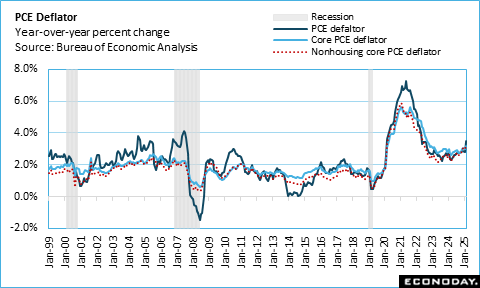
The changeover in leadership comes at a pivotal time for monetary policy. The FOMC has been working to bring down inflation through interest rate policy since the peaks in 2021. Initially it was prices pressures in services holding back disinflation progress, but that had started to improve by early 2025. Then there was the price shock from the imposition of punitive tariffs starting in April 2024 which led to higher prices in commodities that are only now finally passing through the inflation data. However, the oil shock brought on by the start of the war on Iran on February 28 has delayed progress in disinflation again. How long that impact will take to move through the US economy is uncertain.
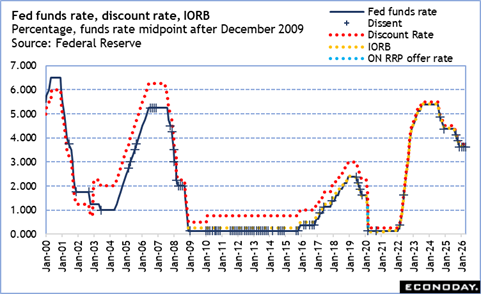
The FOMC decision on April 29 to leave the fed funds target rate range at 3.50 to 3.75 percent was as expected. The accompanying statement was not much different from recent ones except in two aspects.
First, the statement did not include the “somewhat” characterization of “elevated” inflation. This indicates that the committee saw the risks to price stability as more pronounced at present, while the risks to maximum employment were not much changed.
Second, while the vote on maintaining the current fed funds target rate range was 11-1 with a dissent from Stephen Miran as anticipated, it was not the only dissent. Three of the district bank presidents “supported maintaining the target range for the federal funds rate but did not support inclusion of an easing bias in the statement at this time”. This suggests that a growing minority of Fed policymakers may be thinking at a rate increase should be more central to future policy discussion.
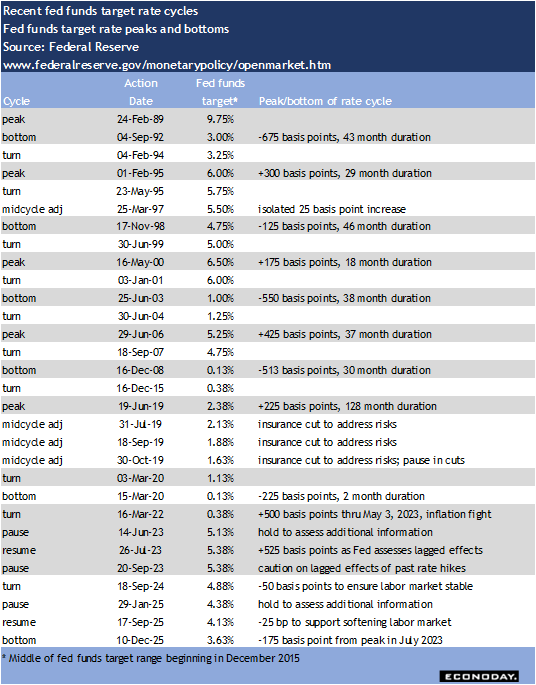
The question is if a rate hike could be done as the sort of insurance move to keep inflation from becoming entrenched. The use of a mid-cycle adjustment is not unknown and could be used as a signal by the Fed that it will continue to maintain its credibility as an inflation fighter and also communicate that it is paying attention to the data and the impact on household budgets.