The data on the housing market in the week ending August 21 points to unfavorable conditions for both existing and new homes. Despite somewhat better supply of homes for sale, mortgage rates and prices combined with uncertain economic conditions are keeping home sales on the soft side. This in turn discourages new construction unless the homebuilder has a buyer and signed contract.
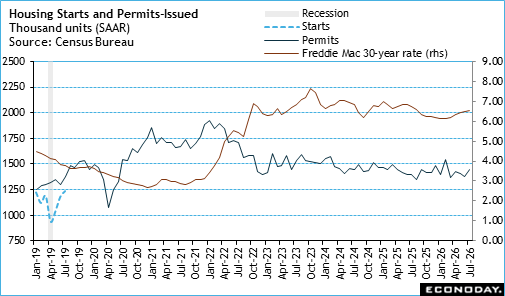
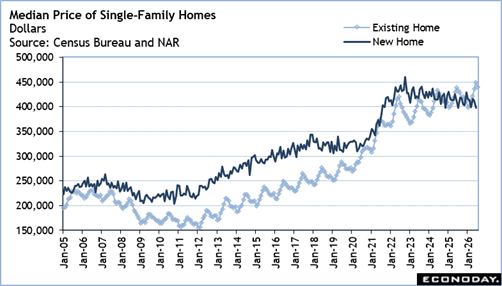
The summer months can be productive for homebuilders but July saw a 12.4 percent plunge in housing starts to 1.239 million, the lowest level since 1.182 million in May 2026 when mortgage rates started to rise and 1.039 million in May 2020 during the first months of the covid pandemic. Home prices are at record highs and even the typical downward movement in prices in the second half of the year may not be sufficient to bring gloomy consumers to a more optimistic view of home affordability.
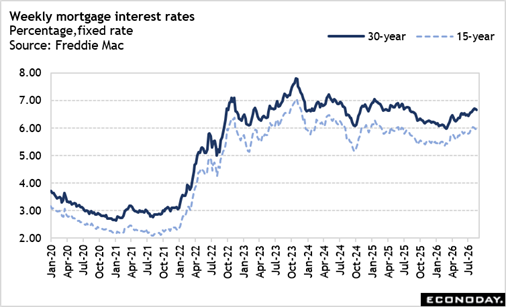
Mortgage rates were on the rise in July from June. From a Freddie Mac average rate of 6.43 percent in the July 2 week, it reached 6.66 percent in the July 2026 week and continued upward to 6.69 percent in the August 6 week. It has moderated slightly since then but rates above 6.5 percent for fixed rate mortgages seem to chill potential homebuyers’ motivation. Adjustable-rate mortgages are seeing rates around 6.0 percent since mid-July which makes this type of mortgage less attractive as well for purchasers and refinancers.
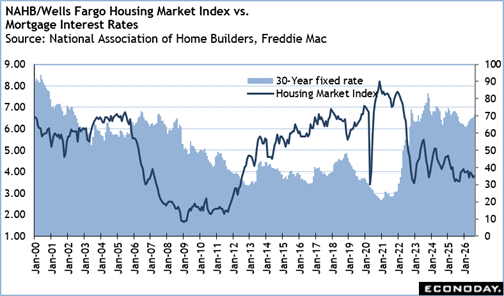
The NAHB/Wells Fargo housing market index (HMI) for August remained essentially unchanged at 35 in August from 34 in July and 36 in June. The index components suggested that incentives are helping to move current inventory but the expected sales and buyer traffic are flat. There’s little indication that housing will pick up in the near term.
The release of the minutes of the July 28-29 FOMC meeting confirm that at “several” participants were in favor of a rate hike at that time. This suggests that more than the three dissenting voters wanted to lift the fed funds target rate range by 25 basis points. The reluctance to increase the rate reflects broad uncertainty about the inflation outlook three weeks ago as the war on Iran dragged on and the impact of prior price increases over the short term. However, the conflict in the Middle East continues to simmer threateningly and prospects of meaningful roll backs into prices are fading.