Economic data in the week took a backseat to geopolitical events which have outpaced the reporting cycle. The Trump administration ramped up belligerent rhetoric toward foreign countries and domestic institutions which only heightened uncertainty about the outlook for the US. The evidence for the third quarter 2026 to date points to continued modest to moderate expansion but the details of where growth is occurring are contributing to unease on the part of businesses and consumers.
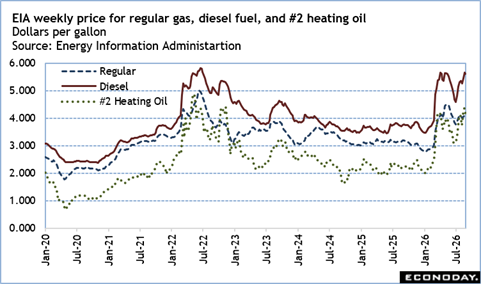
Similar to recent weeks, there is a lot of focus on the price of diesel fuel which is having a negative impact for any industry that needs it to power machines and vehicles. Consumers are minor users of diesel but the formulation is similar to #2 heating oil. With the cooler months arriving, the price is now another drain on discretionary income and will divert more consumer spending to essentials. This could be bad news for the upcoming holiday shopping season that retailers are already promoting.
The EIA weekly price for #2 heating oil was $5.025 per gallon as of September 18 – the highest since the data began in 1986. The $6.529 for all types of diesel fuel was also a record high on September 18. The price of a gallon of regular gas was $4.478 on September 18, which was approaching the near-term peaks of $4.500 and $4.490 in the May 11 and 18 weeks and is back up to levels seen in May and June of 2022 when recent inflation has its hottest.
The pass-through of these costs to other businesses and consumers could ripple into the economy for months. Fed policymakers are going to remain hawkish on interest rates, especially in light of Chair Kevin Warsh’s repeated assertions that the FOMC can and will get inflation under control, and that the primary means of implementing monetary policy is adjusting the fed funds target rate range.
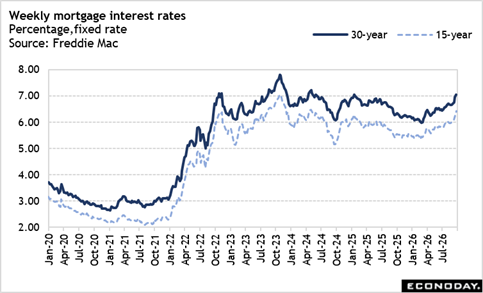
Bond markets are expecting central banks to reset rates higher in the current inflation environment. This is driving Treasury yields higher. At present, this means that the struggling housing market will get no relief in its affordability calculations from mortgage interest rates. The Freddie Mac weekly average rate for a 30-year fixed rate mortgage rose to 7.03 percent in the September 24 reading to its highest since 7.04 in the January 16, 2025 week and matched 7.03 percent in the May 30, 2024 week. Rates around the 7 percent mark have a chilling effect on homebuying and refinancing. Many of those for whom homebuying is a more urgent will opt for adjustable rate mortgages in the hope of refinancing to a lower rate before the rate rest happens. In the meantime, high prices and limited supply of the more sought-after units will keep sales of homes soft.