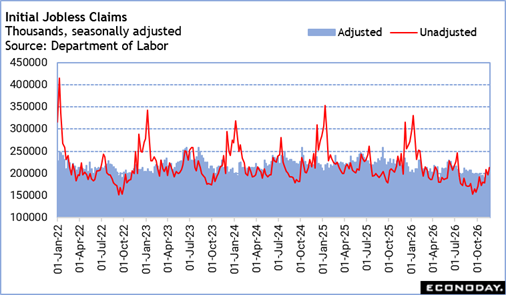
The numbers for initial jobless claims got a little lost behind the barrage of other data at 8:30 ET on Wednesday. It is worth taking a closer look at these numbers as the holiday period approaches. The adjusted level of claims was 189,000 in the week ending November 21. This was the lowest since 189,000 in the July 18 week. These two readings are the lowest since 182,000 in the week of September 6, 1969. In a normal economy this would suggest a vibrant labor market. However, as the US economy undergoes some significant adjustments related to massive shakeups in the federal government, changes in tax and social safety net policies, and geopolitical violence, labor market fundamentals are altered.
First, it should be noted that there are far fewer people eligible for unemployment insurance in recent decades. Although anyone may apply for unemployment benefits, many workers facing a job loss just don’t bother.
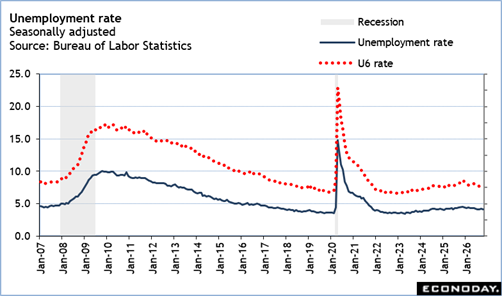
Second, the U-6 unemployment rate suggests that the number of long-term unemployed and discouraged workers is growing. Workers who have not been able to find a job can’t be laid off without returning to employment at least briefly. Many businesses are not laying off simply because they haven’t increased payrolls to where layoffs are needed. On the other hand, for workers with the right skills and experience, job security has been pretty good. But less skilled workers like those in retail and customer service positions that have been cut by industry shrinkage are not finding work.
Historically, many businesses reduce payrolls toward year-end to cuts costs and/or adjust for slower seasonal demand. Some of these layoffs are not going to happen as businesses hold on to needed workers. The risk of not finding qualified replacements – especially at higher compensation – will make retaining present workforces a better choice.
Third, this year has not seen the same demand for seasonal workers in retail and warehousing that normally gets laid off in early January. On the other hand, delivery services have looked to hire substantially over the holidays due to increases in holiday shopping. Most of these will get laid off in January as well.
All this will play havoc with seasonal adjustment factors for adjusted claims. For the next six or seven weeks, it is the unadjusted number of claims that will be more informative about this aspect of the labor market.