The release of the minutes of the June 16-17 FOMC meeting mostly confirmed what was already known. The minutes reflect conditions three weeks ago when the situation in the Middle East had a more optimistic outlook. Since then, developments in the Middle East leave the geopolitical landscape more uncertain. Resumption of hostilities with Iran have resulted in immediately higher oil prices. As a result, Fed policymakers are going to have to reassess the outlook for price stability and maximum employment when they meet on July 28-29.
The minutes said, “Participants anticipated that inflation would remain elevated in the near term and then begin to decline as the effects of tariffs and energy price increases wane and other supply disruptions related to the closure of the Strait of Hormuz diminish. Participants judged that the risks to the inflation outlook were still tilted to the upside. Many participants noted that elevated commodity prices and supply disruptions could persist longer than currently anticipated. Several participants reported that their business contacts were facing notable cost pressures. Some participants observed that the sharp rise in input costs reported in business surveys raised concerns about the potential for higher energy and commodity costs to pass through more broadly to final goods prices.” This situation is not going to improve by the time of the next meeting.
The minutes found conditions in the labor market stable, but not without concerns about its lackluster performance so far in 2026. The minutes said, “Participants generally remarked that payroll employment gains had strengthened this year and appeared roughly consistent with underlying labor force growth. Several participants observed that other labor market indicators, such as job openings, initial unemployment insurance claims, and layoffs had remained stable in recent months and that such data pointed to a balanced labor market. Several participants noted, however, that declines in the job-finding rate and certain survey measures of job availability reflected a labor market with relatively low dynamism. Many participants remarked that the labor market was not currently a source of inflationary pressures, or that nominal wage growth remained consistent with inflation moving toward 2 percent.”
On net, three weeks ago policymakers were split about whether to cut rates or not, but the risks to inflation left overall sentiment hawkish and willing to raise rates if appropriate.
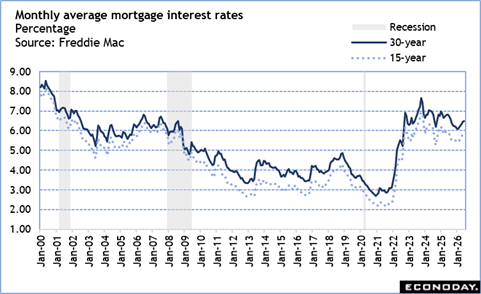
The light economic data calendar in the week means that there were no standout reports. It may be worth considering the state of mortgage interest rates and the impact on the housing market. Homebuyers and home refinancers remain extremely sensitive to even small changes in rates that can affect home affordability. Adjustable rate mortgages have increased in popularity as a way to reduce monthly payments and hope for a chance to refinance to a lower fixed rate later. Nonetheless, record high home prices and lack of affordable inventory is keeping some potential homeowners out of the market, while economic uncertainty is causing others to hesitate before committing to a big purchase. Current rates aren’t bad in the historical context, but feel high compared to the record low rates in the post-recession period.