The October consumer price index (CPI) and final-demand producer price index (PPI) set the stage for a rate hike at the December 8-9 FOMC meeting. There is no official year-over-year percent change for the CPI due to the long federal government shutdown in October and early November in 2025 when the October surveys were not taken.
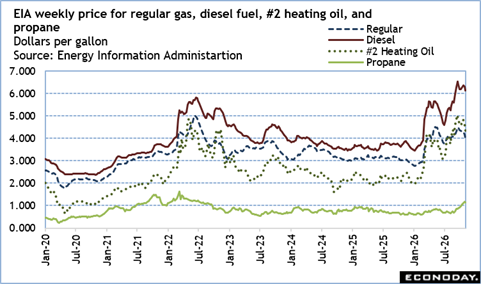
The month-over-month data came in above expectations. The CPI rose 0.4 percent in October from September. There was the expected slower increases for energy, but food prices accelerated to lift the overall reading. Food prices were up 0.5 percent after no change in September. Energy prices were 0.7 percent higher in October, slowing from the 5.2% month-over-month gain in September. The CPI less food and energy was up only 0.3 percent. Importantly, shelter costs rose 1.0 percent in October from September. With prices for food, energy, and shelter still on the rise, over half of the CPI basket of goods continues to see increases that are eating away at household discretionary spending and faster than any recent gains in income.
The PPI month-over-month came in at or just below expectations. While this indicates that upward price pressures may be slowing for producers, there is still plenty of momentum to pass on to other businesses and consumers. The October PPI was up 0.3 percent month-over-month and up 6.5 percent compared to a year ago. The core PPI – excluding food, energy, and trade services – is up 0.5 percent from the prior month and 4.9 percent higher than October 2025.
The PPI for food rose 1.3 percent in October from September, while energy was down 0.1 percent and trade services 0.2 percent lower. Energy prices have been the main driver of inflation in recent months. The PPI for energy probably overstates the softening in energy prices. The PPI takes its read on energy on Tuesday in the second week of the month. The dollar per barrel of WTI crude was $95.39 on October 13 versus $94.21 on September 8. However, in both months the price increased in the following weeks. The BLS noted, “Over 80 percent of the October increase in the index for final demand services is attributable to prices for truck transportation of freight, which rose 3.9 percent.” Continued elevated fuel costs – even as these abate somewhat – are feeding into higher prices down the line.
Fed policymakers are going to be watching the direction of energy prices closely but also with an awareness that in some instances existing contracts have held back price increases. Many of these will reset at the end of this year. Businesses that have had little choice but to absorb fuel costs will be pricing to make up at least some of the losses. The FOMC’s inflation watch will be far from over in the coming months and the bias for the fed funds target rate range will remain for no change or a measured increase.