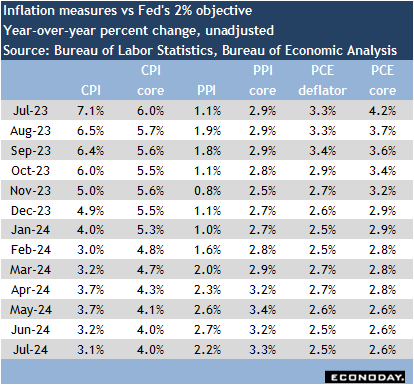
In the countdown to the September 17-18 FOMC meeting, the number of reports that might change the outlook for a rate cut are fewer. As of Friday, August 30, there is less room for a downside surprise in the data on inflation and inflation expectations.
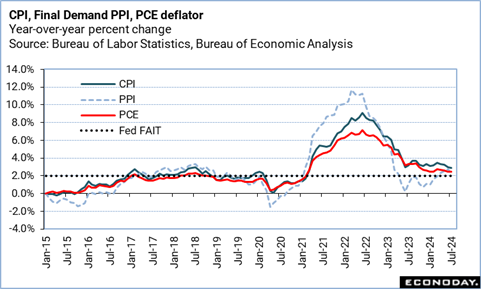
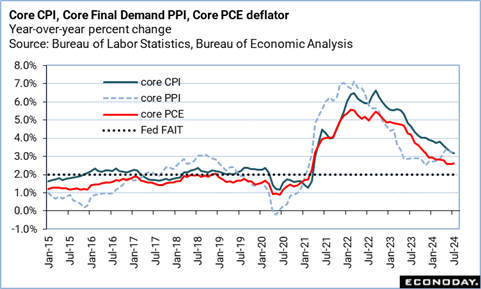
The PCE deflator is the Fed’s preferred measure of consumer inflation due to its broader basket of goods. As of the July data, the PCE deflator is at up 2.5 percent year-over-year and the core PCE deflator is at up 2.6 percent year-over-year. While the year-over-year pace of inflation has been essentially unchanged for the past three months, it hasn’t worsened and it remains within sight of the Fed’s 2 percent flexible average inflation target. Adding to this is evidence in other inflation reports – notably the CPI – that some of the more stubborn sources of inflation like housing and non-housing services are finally seeing an easing in upward price pressures. Fed policymakers can finally say that they have achieved “greater confidence” in success in sustainably bringing down inflation.
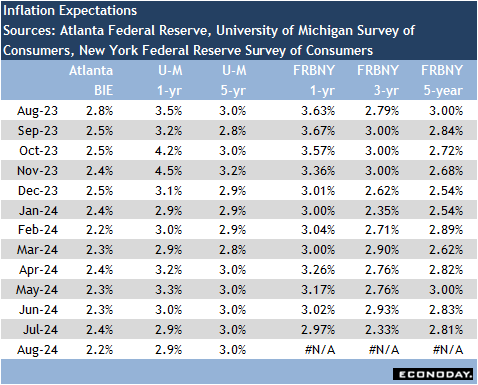
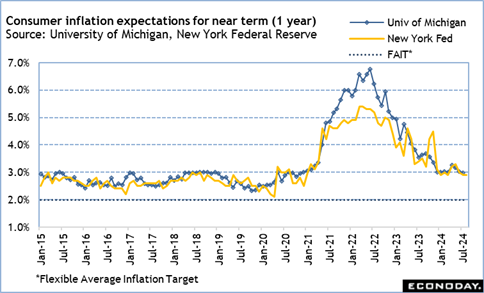
Moreover, measures of inflation expectations for businesses and consumers reflect a belief that inflation is moderating back toward levels associated with historical norms when inflation is less of an economic threat. It is unlikely that inflation expectations will fully return to pre-pandemic levels, at least until memories fade considerably.
The next major inflation report is the CPI for August at 8:30 ET on Wednesday, September 11, followed by the PPI report at 8:30 ET on Thursday, September 12. At this writing, neither has much potential to impact the totality of the economic data in terms of derailing a rate cut.